Kākāpō Year 1 classes are located in Rooms 1 and 3.  Our Year 0 class is in Room 25.

Kākāpō Year 2/3 classes are located in the upper floor of the building adjacent to the office.

The Kākāpō team fosters self management, supporting akōnga to become increasingly more independent and resilient as learners. The curriculum is  integrated, with student voice and personal interest driving learning experiences.

Below you will find some information about the Kākāpō syndicate.

Please feel free to contact your child’s teacher (kaiako) at any point during the year. 

Kaiako are in their classrooms from 8:30am in the mornings so the best time to discuss any issues or concerns with them is between 8:30-8:45am. Kaiako are more than happy to meet with you at other times.

Kākāpō Teachers

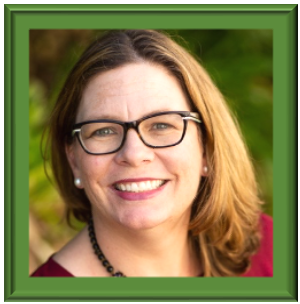
Michelle Pontifex

Rūma ono (Room 6) Kākāpō Team Leader

m.pontifex@ngaio.school.nz

Kia ora koutou,
I am Michelle and I’m proud to be part of our kura whānau. With over 20 years of teaching experience, I am deeply passionate about supporting our tamariki to thrive. Ngā ākonga are always at the heart of what I do, and I strive to create a positive, manaakitanga-filled environment where they feel empowered to ako, grow, and succeed. In addition to teaching, I am privileged to serve as the Team Leader of Kākāpō. I love working collaboratively with my team and whānau to ensure our learners have the best opportunities to shine. Teaching and leading are both roles I truly treasure, and I feel incredibly lucky to do what I love every day.

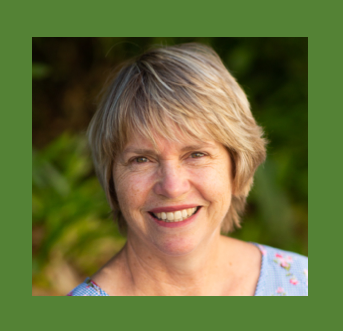
Tessa Gatenby

Rūma whitu (Room 7)

t.gatenby@ngaio.school.nz

Kia ora,

I’m Tessa and I am delighted to be back teaching in the Kākāpō syndicate this year. I’m looking forward to getting to know some new faces and building positive connections with the tamariki as we learn and grow throughout the year. I’m going into my sixth year of teaching at Ngaio School and I’m excited to work within such a fantastic team. I believe creating and maintaining reciprocal and effective relationships with students is a crucial aspect of teaching, and I work hard to make sure every child feels valued in the classroom. I’m a Wellington local and thoroughly enjoy being part of the Ngaio community.

Christina Johnstone

Rūma rima (Room 5)

c.johnstone@ngaio.school.nz

Kia ora koutou,
Ko Christina tōku ingoa.
I feel privileged to have been teaching at Ngaio School since 2015. During this time I have taught from years one to four. I am thrilled to be part of the Kākāpō Syndicate again this year teaching years two and three. I am passionate about creating a positive, engaging and supportive learning environment where ākonga can flourish as individuals and love being part of the Ngaio community.

Thomas Searancke

Rūma waru (Room 8)

t.searancke@ngaio.school.nz

Kia ora,

I am Thomas, and I am excited to be joining the Kākāpō Syndicate at Ngaio School. I began teaching in 2018 and since then I have taught years two through six. I look forward to getting to know your children and helping them thrive in their learning.

Bronwyn O'Halloran

Rūma tahi (Room 1)

b.ohalloran@ngaio.school.nz

Kia ora koutou,
Ko Bronwyn tōku ingoa.
A warm welcome to a new year and an exciting learning journey at Ngaio School. I have had 30 years of teaching experience and have held a variety of roles from teacher, senior teacher to assistant principal. I have been teaching at Ngaio School since 2015. This year I am excited to be teaching our youngest students and building a strong foundation of learning as our newest learners begin their education at Ngaio School. I am also a mum to two young boys/men. I love to spend family time with my husband and 2 boys at Waikanae Beach, walking the beach and having time together making fun memories.
I look forward to knowing and making connections with all of the Kākāpō families.

Elise Chan

Rūma toru (Room 3)

e.chan@ngaio.school.nz

Kia ora,

Ko Elise tōku ingoa.

It’s lovely to return back to Ngaio School after having such a warm welcome in 2024. During my time teaching, I have enjoyed working with all year groups from Year 1 to 6, however, I am particularly passionate about teaching junior students. I look forward to another exciting year working alongside the Year 0/1 tamariki and creating a safe and supportive environment where they can all thrive and have a positive start to school.

Karen Doogan

Rūma rua tekau mā rima (Room 25)

k.doogan@ngaio.school.nz

I really love teaching. It is a special joy to work with tamariki as they start their schooling years. Young learners have a particular energy and enthusiasm that I enjoy. It has been my privilege to be part of the Ngaio School staff and community for many years. I have always thought my own children were fortunate to attend this wonderful school and I work hard to ensure that the tamariki I teach, have the opportunity to thrive here too.
Outside of school I enjoy walking, gardening and spending time with family.

Teacher Release

At Ngaio School, we are fortunate to have a team of experienced and passionate release teachers supporting our ākonga and kaiako. Classroom Release Time allows our teachers to focus on planning and assessments etc.

Donna Beechey will cover:

  • Michelle’s leadership and CRT every Wednesday.
  • Tessa’s CRT every second Tuesday – odd weeks.
  • Thomas’ CRT every second Tuesday – even weeks.

Alison Craven will cover:

  • Christina every Friday – CRT even weeks + Non-Teaching odd weeks 
  • Bronwyn’s CRT every Tuesdayd from 9-11am.
  • Elise’s CRT every Thursday from 9-11am.
  • Karen every Monday

Our release teachers are dedicated professionals who embody the values of our kura and are committed to maintaining a positive, engaging learning environment for all tamariki.

Please feel free to contact your child’s whānau teacher at any point during the year. Teachers are usually found in their classrooms from 8:30am. The best time to discuss any issues or concerns with them is between 8:30-8:45am. If you would like to make a different time to touch base just flick your child’s whanau teacher an email.

You can check out our part time teachers in the Our Team section.

Brain Break

Brain Break – Keeping Our Ākonga Energised!

Our morning learning block runs from 9:00 to 11:00, so we have a short Brain Break to help keep tamariki focused and energised. During this time, children can enjoy a small snack of fruit to refuel their brains. Please send a small container with cut-up fruit or vegetables for your child to eat during this break. This helps support their concentration and learning throughout the morning. Thank you for your support.

Syndicate Hui

Kākāpō Hui are held in Rūma 6+7 and start at 9:10am. Whānau of the hosting classes are invited to attend. 

Week 2: Friday 31st July – Room 6 & 7  

Week 4: Friday 14th August – Room 1 & 5

Week 6: Friday 28th August – Room 3 & 8

Week 8: Friday 11th September – Room 6, 7 & 25

Syndicate Programme - Termly overview

Inquiry – I am an Artist

I am an Artist is an inquiry that encourages our ākonga to explore their creativity through visual arts, drama, dance and music. Using the Māori pūrākau Ngake and Whātaitai as inspiration, ākonga will discover how artists tell stories, express ideas, and communicate meaning. Throughout the term, they will experiment with different artistic techniques, collaborate with others, and build confidence as creative thinkers and makers while reflecting on their growth as artists.

Writing & Reading Focus - Term 3

This term in literacy, our focus will be on developing key skills in listening, speaking, reading, and writing. Here’s what your tamariki will be learning:

Oral Language

  • Listening and Speaking: Developing oral language skills to communicate clearly and effectively, and using language purposefully in various contexts, e.g. Pitopito kōrero (news).
  • Te Reo: Strengthening listening and speaking skills in te reo Māori through everyday conversations and classroom activities.

Writing

  • Create meaningful texts by developing and organising their ideas.
  • Use planning, drafting, and editing to strengthen their writing.
  • Spelling and vocabulary knowledge is built through:
    • explicit teaching of phonics,
    • high-frequency word recognition, and
    • learning common spelling patterns.

Reading

  • Personal Reading: Encouraging tamariki to select and read texts independently for both enjoyment and learning.
  • Instructional Reading: Using the Better Start Literacy Approach (BSLA) to build structured literacy skills and deepen understanding.
  • Shared Reading: Engaging with oral narratives to develop comprehension, fluency, and an appreciation of stories.
  • Reading Comprehension: Exploring a variety of texts to understand genres, structures, language features, and deeper meanings.

Phonological Awareness and Spelling

  • Focusing on phonics through the BSLA programme.
  • Learning essential spelling lists, high-frequency words, and spelling patterns.
  • Building vocabulary with a “word of the week” and practising dictionary skills.

We are excited to see your tamariki grow as confident readers, writers, and speakers throughout the term.

Mathematics (Pāngarau) - Term 3

At Ngaio School, we follow the refreshed New Zealand Curriculum for Mathematics and Statistics. In the early years (New Entrants to Year 3), the focus is on developing confident, curious learners who can explore, reason, and problem-solve using mathematics in real and meaningful ways. Our teaching is hands-on, with a strong emphasis on talk, collaboration, and using concrete materials to build deep understanding.

This term, our focus in mathematics will be covering the following: 

Year 1

Geometry 

Shape and Spatial Reasoning – Sorting and Composing 2D shapes                                             

Number

Operations – Multiplication and Division

Number

Rational Numbers – Fractions and Time                                                                      

Consolidating

Addition and subtraction facts, doubles and halves, comparing, ordering, reading and saying numbers


Year 2+3

Number

Rational Numbers – Fractions 

Number

Equal Groupings – Multiplication and Division 

Geometry

Shape and Spatial reasoning 

Measurement

Angles 

Consolidating

Time, estimation, number sense, place value and basic facts 

Te Ao Māori - Term 3

Matariki 

Kite making 


Purakau

The Eyes of Tawhirimatea 

Ngake and Whātaitai


Language 

Every day language and classroom communication 

Numbers forwards and backwards to tekau and rua tekau

Digital Technology Focus - Term 3

Designing and Developing Digital Outcomes

In authentic contexts and taking account of end users, students make decisions about creating, manipulating, storing, retrieving, and sharing digital content for a specific purpose, given particular parameters, tools, and techniques. Students will evaluate digital content and explore how photography can be used, both as a way of sharing learning and as an art form.

Physical Education Focus - Term 3

Daily Fitness

Each day students will have the opportunity to improve their basic fitness through participating in a range of physical activities and cooperative games. 


Syndicate Sport

Ākonga will be exploring dance to express ideas, tell stories, and connect with the world around them. They will practice moving different parts of their bodies to music, creating short movement sequences, and exploring rhythms and elements from te ao Māori. Ākonga will learn how body shapes, levels, and pathways can be used to communicate meaning and perform creatively.

Graduate Profile / ROCKET Values - Term 3

Graduate Profile – Ngaio Ākonga are Resilient

Being open-minded means being willing to listen to new ideas, try new things, and understand that others may think or feel differently from you. An open-minded ākonga will give unfamiliar activities a go, listen respectfully to others’ opinions, and consider different points of view.


ROCKET Values

Open Minded 

Being open-minded means being willing to listen to new ideas, try new things, and understand that others may think or feel differently from you. An open-minded ākonga will give unfamiliar activities a go, listen respectfully to others’ opinions, and consider different points of view.

Empathy

Empathy is about understanding how someone else is feeling and showing that you care. It’s putting yourself in someone else’s shoes.
An empathetic ākonga checks in on friends, listens when someone needs to talk, and shows care in how they treat others.

Library Visits

Each week we visit the library and children are able to choose 1-2 library books to take home and enjoy. The books are then returned the following week, in time for new books to be issued. Please help your child to remember their library books each week, so they can return them and get new books issued. The library is also open during lunchtimes for children to independently issue and return books.


Library Timetable

Monday: 

  • Rūma 6+7 Michelle and Tessa

Tuesday:

  • Rūma 8 Thomas

Wednesday: 

  • Rūma 5 Christina

Friday:

  • Rūma 1 Bronwyn
  • Rūma 2 Karen
  • Rūma 3 Elise

Home Learning

Reading

At Ngaio School we use the Better Start Literacy Approach in our first two years of school. Your child will bring home a variety of language tasks to practise. These tasks can vary from guided books, independent books, word building games or phonics games to help your child practise their decoding skills. 

Please click here for more information about how you can help support your child with their literacy at home.

Poetry Books : Each week your child will bring home a poem in their poetry book to share with you. 

In years 2 and 3 students continue to be exposed to a broad range of texts and vocabulary and reading widely at home helps to reinforce the reading strategies introduced at school. Poems and reading books are sent home regularly and students are encouraged to select their own reading books for personal enjoyment.

Library Books: Each student will have the opportunity to select and share one or two books from our wonderful school library with their whānau.

Spelling

In the year 1 classes we work to develop the children’s spelling knowledge through both phonic knowledge, word building, rhyming words and securing the skills to spell new words.  

Twice a year (Term 1 and Term 3) the children will be tested formally on their spelling vocabulary and the data will be sent home so you are able to support your child with words they have not yet secured.

This continues in year 2 and by year 3 akōnga have their own individual spelling programme based on results from Essential Word testing. Akōnga have five words to learn each week, are tested by a buddy on Fridays, then new words selected.